

If you’re dealing with a letter or notice from the Canada Revenue Agency (CRA), understanding whether you’re facing a CRA Review or a CRA Audit can make a major difference in how you respond, how much risk you’re exposed to, and what actions you should take next. At maxpro financials, we help individuals and businesses across Canada navigate CRA reviews and audits with professional tax accounting and advisory support—so problems don’t escalate into costly penalties.
Below is a clear, practical breakdown of CRA audit vs review, written to help you make the right decisions fast.
We provide a full suite of Accounting and Bookkeeping Service and throughout various areas of British Columbia.
What Is a CRA Review and Why It Happens?
A CRA review is a limited examination of specific items on your tax return. It usually happens after you file and focuses on verifying details such as income, deductions, or credits you claimed.
A CRA review does not mean the CRA believes you’ve done something wrong. In many cases, it’s a routine check triggered by missing documents, unusually high claims compared to prior years, or discrepancies between your return and third-party slips (such as T4s or T5s).
During a review, the CRA typically asks for:
- Supporting documents (receipts, invoices, contracts)
- Clarification on how a figure was calculated
- Proof of eligibility for a deduction or credit
Most reviews are resolved by submitting documents on time. However, if handled poorly or ignored, a review can escalate into a full audit.
Our other tax services:
- Personal Tax Return Coquitlam
- Business Tax Return Coquitlam
- Online Payroll Services Coquitlam
- WCB Employer Registration Coquitlam
- Record of Employment Service
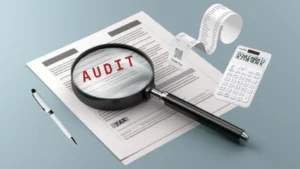
What Triggers a CRA Audit?
A CRA audit is more serious and far more comprehensive than a review. It involves an in-depth examination of your financial records, often covering multiple tax years.
Common triggers for a CRA audit include:
- Repeated errors or inconsistencies across filings
- Large or unusual deductions (home office, business expenses, GST/HST credits)
- Cash-intensive businesses
- Information mismatches reported by third parties
- Prior CRA adjustments or unresolved compliance issues
Unlike a review, a CRA audit often includes direct communication with an auditor and may involve on-site or virtual inspections of records.
CRA Audit vs Review: Scope, Risk, and Consequences
Understanding the difference between CRA review vs audit is critical, because the level of exposure and potential consequences vary significantly.
| Factor | CRA Review | CRA Audit |
| Scope | Limited to specific line items | Full examination of books and records |
| Duration | Usually short (weeks) | Can last months or longer |
| Risk Level | Low to moderate | High |
| Penalties | Rare if corrected | Possible penalties, interest, reassessments |
| Years Reviewed | Typically one tax year | Multiple tax years possible |
| Professional Help | Helpful but optional | Strongly recommended |
A key mistake many taxpayers make is treating a CRA audit like a review. Audits require strategy, documentation control, and professional representation.
Our other financial services:
- Financial Service BC
- Business Valuation Services BC
- Financial Planning Services
- Financial Due Diligence Services
How to Respond to a CRA Review or Audit?
Your response determines whether the situation stays manageable or becomes costly.
For a CRA review:
- Respond within the deadline
- Provide only what is requested
- Ensure documents are accurate and well-organized
- Avoid over-explaining or submitting unnecessary information
For a CRA audit:
- Do not respond casually or emotionally
- Avoid direct discussions without preparation
- Keep communication consistent and documented
- Ensure your records align with reported figures
In both cases, delayed responses or incomplete documentation increase the risk of reassessment.
When to Involve an Accountant During a CRA Case?
One of the biggest advantages of involving a tax accountant early is risk containment. An experienced accountant understands how CRA reviewers and auditors assess files and can prevent small issues from expanding.
You should involve an accountant when:
- The CRA requests detailed explanations or multiple years of records
- Large dollar amounts or business expenses are under review
- You’re unsure how to justify deductions or income classifications
- A review appears to be escalating into an audit
At maxpro financials, we act as an intermediary between you and the CRA, ensuring responses are accurate, strategic, and compliant—while protecting your financial interests.
FAQ
- If I receive a CRA review letter, does that mean I’m already in trouble?
Not necessarily. A CRA review is often a routine verification. However, ignoring it or submitting weak documentation can quickly turn a low-risk review into a higher-risk audit. - What is the biggest mistake people make during a CRA review?
Over-explaining or sending documents that were not requested. This can raise new questions and expand the scope of the review unnecessarily. - Can the CRA go back multiple years during an audit?
Yes. Unlike a review, a CRA audit can extend to several previous tax years if the auditor identifies patterns or recurring issues. - Will a CRA audit automatically result in penalties or fines?
No, but the risk is real. Penalties and interest usually apply if the CRA determines negligence, misrepresentation, or unsupported claims. - Should I stop communicating with the CRA once an accountant is involved?
Yes. Once represented, communication should go through your accountant to ensure consistency, accuracy, and strategic responses. - How do I know if my CRA review is escalating into an audit?
Requests for broader documentation, multiple years of records, or detailed explanations beyond the original issue are common warning signs. - Is it risky to respond to a CRA audit without professional help?
Yes. Audits involve technical tax interpretation, documentation strategy, and negotiation. Handling it alone increases the chance of reassessment. - Can proper accounting records prevent a CRA review or audit?
Strong bookkeeping doesn’t guarantee avoidance, but it significantly reduces risk and makes resolving CRA inquiries faster and safer.