
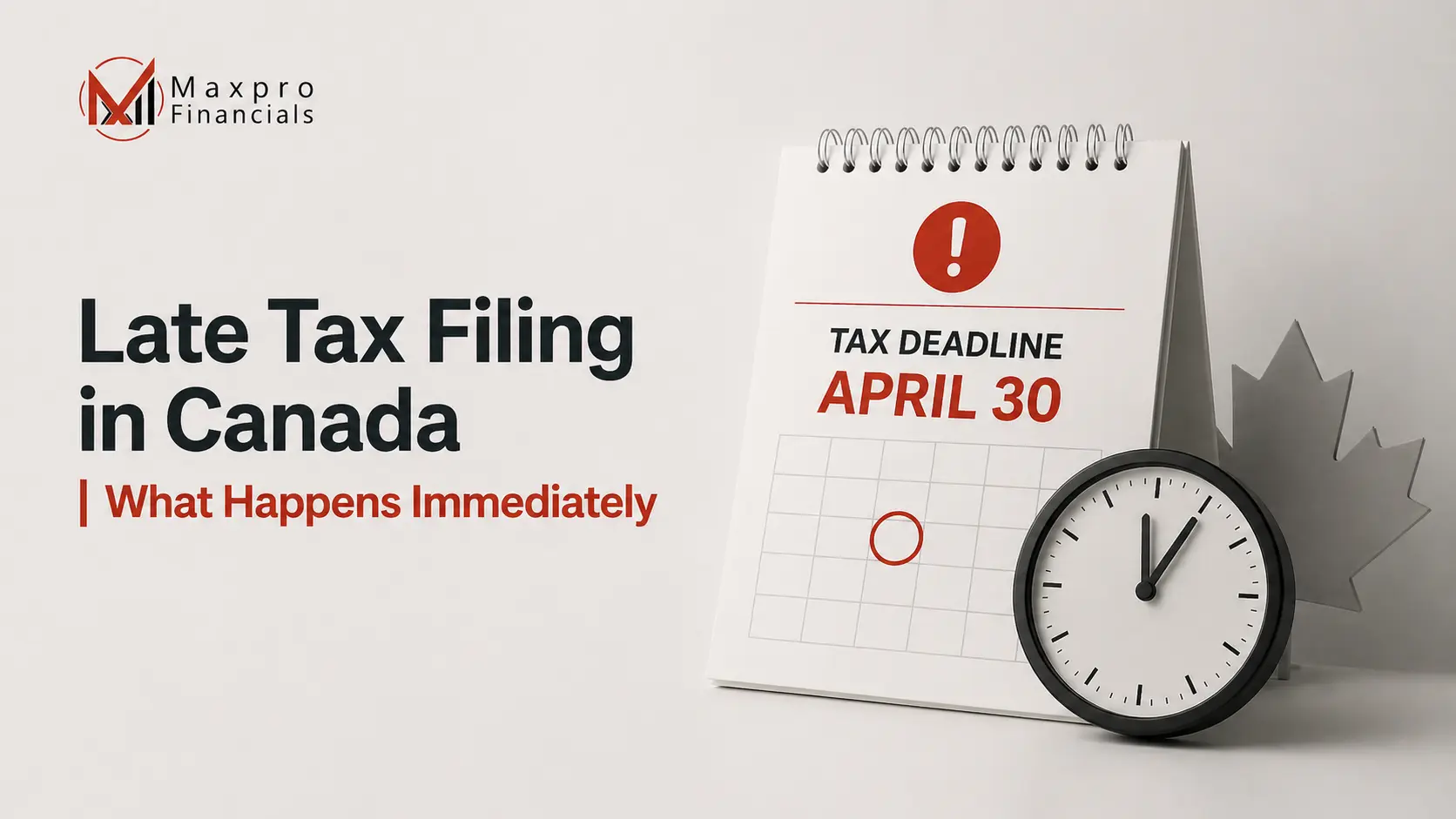
If you don’t file your taxes in Canada, the impact depends on one key factor: whether you owe money or not. If you owe taxes, penalties and interest start adding up quickly. Understanding penalties for late filing can help you see how quickly these costs grow. If you don’t owe, you won’t face penalties but you can lose access to important benefits. Either way, ignoring your tax return is not a safe option. Here’s what actually happens right after you miss the deadline.
We deliver a broad range of Tax Accounting Services in BC and other locations across British Columbia.
On this page
Immediate consequences of late tax filing
| Situation | What Happens Right Away |
| You owe taxes | 5% penalty + 1% per month interest |
| You don’t owe taxes | No penalty, but benefits may be delayed |
| You delay for months | Interest compounds daily |
| Repeated late filing | Higher penalties (up to double) |
How Unfiled Taxes Affect Benefits and Credits
One of the most overlooked consequences of not filing taxes in Canada is losing access to government benefits even if you had no income.
Benefits that can be affected:
- Canada Child Benefit (CCB)
- GST HST credits
- Climate action incentive payments
- Provincial income-based benefits
Why this happens:
CRA uses your tax return to calculate your eligibility. If you don’t file:
- Your benefits can be paused or completely stopped
- Payments may not resume until your return is processed
- You could lose months of payments permanently if delays continue
What to Do After a Missed Tax Return in Canada
If you’ve missed a tax return in Canada, don’t panic but don’t ignore it either. The sooner you act, the more you can reduce penalties, stop interest from growing, and avoid bigger problems with CRA. Even if you’re behind by multiple years, there’s a clear way to fix it.
Step 1: File Your Return Immediately (Even If You Can’t Pay)
The biggest mistake people make is waiting until they can pay before filing. That’s the wrong move. Learning how to file personal tax returns properly helps you take action faster and reduce penalties.
- Filing late is better than not filing at all
- Late filing penalties stop increasing once you file
- Interest may continue, but penalties won’t keep growing
If you owe money, filing quickly can significantly reduce how much extra you pay.
Step 2: Estimate What You Owe and Make a Partial Payment
You don’t need to pay everything at once to take control.
- Pay as much as you can upfront
- Even small payments reduce daily interest charges
- CRA calculates interest on the remaining balance, not the original amount
Step 3: Identify All Unfiled Tax Years
Many people who miss one year have actually missed more.
- Check your CRA account or past records
- CRA may request up to 10 years of returns
- Filing multiple years together is common and often necessary
Important: Ignoring older years increases the risk of CRA estimating your income, which usually results in a higher tax bill.
Step 4: Review Deductions and Credits Caref
When you’re filing late, accuracy matters even more. Avoiding common tax return mistakes ensures you don’t overpay or create new issues.
- Claim all eligible deductions
- Include credits like tuition, medical, or childcare
- For self-employed individuals, review business expenses properly
This step can reduce your total tax bill and offset penalties.
Step 5: Set Up a CRA Payment Arrangement (If Needed)
If you can’t pay your balance in full, CRA offers payment plans.
- You can request monthly installments
- Interest still applies, but it prevents aggressive collection actions
- Missing payments on a plan can cancel the agreement
What CRA looks for:
- Your ability to pay
- Your financial situation
- Your willingness to stay compliant going forward
Step 6: Check If You Qualify for Penalty or Interest Relief
In certain situations, CRA may reduce or cancel penalties.
You may qualify if:
- You experienced serious illness or hardship
- You had financial difficulties beyond your control
- There were errors or delays from CRA
This is handled through the Taxpayer Relief Program, and it requires proper documentation.
Step 7: Respond to Any CRA Notices Immediately
If CRA has already contacted you:
- Don’t ignore letters or emails
- Respond within the given deadline
- Provide requested documents quickly
Ignoring CRA communication can escalate the situation to collections and account freezes.
Step 8: Create a System to Avoid Missing Future Deadlines
Fixing past returns is only half the job you need to prevent it from happening again.
Simple ways to stay on track:
- Set reminders around the main tax deadlines in Canada 30–60 days ahead
- Keep income and expense records updated monthly
- Use tax or bookkeeping software
- Work with a professional if your situation is complex
Get Help to Fix Late Tax Filing and Avoid CRA Penalties
Dealing with late tax filing isn’t just about submitting forms it’s about minimizing the financial damage and making sure it doesn’t happen again.
If you’ve missed one or more tax returns, a professional can help you:
- Identify all unfiled years and bring everything up to date
- Reduce penalties where possible through proper filing and adjustments
- Apply for taxpayer relief programs if you qualify
- Set up realistic payment plans with CRA
- Create a system to avoid future missed deadlines
The longer late filing goes unaddressed, the more expensive and stressful it becomes. Getting expert support early can help you regain control, limit penalties, and move forward with a clean financial record. Following proven strategies to avoid CRA penalties can also help prevent future issues.
FAQ
What happens if I never file my taxes in Canada?
CRA can estimate your income and issue a tax bill, often higher than what you actually owe. They may also take collection actions.
Is there a penalty if I file late but don’t owe taxes?
No penalty applies, but you may lose or delay access to benefits and credits.
How much is the late filing penalty in Canada?
Typically 5% of the balance owing, plus 1% per month up to 12 months. Repeat offenses can increase this.
Can CRA forgive penalties for late filing?
In some cases, yes. Under the Taxpayer Relief Program, penalties and interest may be reduced for valid reasons.
What if I missed filing for several years?
You should file all missing returns as soon as possible. CRA generally requires up to the last 10 years.
Will CRA contact me if I don’t file?
Yes. CRA may send notices or requests to file, and eventually take enforcement actions if ignored.
Can I still get benefits if I file late?
Yes, but only after your return is processed. Delays can cause missed or postponed payments.