

On this page
- What Capital Cost Allowance Is and Why You Cannot Just Expense an Asset
- Repair or Capital? The Test That Decides Which Deduction You Get
- CCA Classes and Rates: The Reference Table
- The Classes Most Small Businesses Use: 8, 10, 10.1, 12, 13, 50 and 53
- Vehicles: Class 10 vs Class 10.1 and the Passenger Vehicle Cost Limit
- Rental Property: Class 1 and Why Claiming CCA Can Cost You Later
- The Half Year Rule and the Accelerated Investment Incentive
- Worked Example: Three Years of CCA on a $60,000 Purchase
- Undepreciated Capital Cost, Recapture and Terminal Loss
- Should You Claim the Maximum CCA This Year? When Not To
- Where CCA Goes on Your Return: T2125, T776 and Schedule 8
- FAQ: Capital Cost Allowance in Canada
- Have Us Set Up Your CCA Schedule Correctly From Year One
What Capital Cost Allowance Is and Why You Cannot Just Expense an Asset
You bought a $60,000 piece of equipment this year. You cannot deduct $60,000. You deduct a percentage of it each year, and that deduction is called capital cost allowance, or CCA.
The quick orientation:
- Supplies and repairs are deducted in full the year you incur them. Assets with lasting value are capitalised and deducted over time through CCA.
- Each type of asset belongs to a class, and each class has a rate. Most equipment is Class 8 at 20%. Most vehicles are Class 10 at 30%. Computers are Class 50 at 55%. Buildings are Class 1 at 4%.
- CCA is calculated on a declining balance, so the deduction shrinks every year and the asset is never fully written off.
- The half year rule normally limits you to half the deduction in the year you buy. The accelerated investment incentive currently suspends that, though the bonus on top of it has phased out for 2026.
- CCA is optional. You can claim any amount from zero up to the maximum, and there are years when claiming zero is the right answer.
Here is the whole thing.
The logic is that an asset you will use for years should have its cost spread over those years, matched against the income it helps produce. A laptop you will use for four years is not a cost of this month. It is a cost of four years.
CCA is the tax version of depreciation. It is not your accounting depreciation. Your financial statements may depreciate that laptop straight line over three years; CRA does not care. For tax you add back the book depreciation and deduct CCA instead, which is one of the standard adjustments on Schedule 1 of a T2.
How the mechanics work:
- Assets go into a class, and each class is a pool. You do not track assets individually within a class, you track the pool.
- The pool balance is the undepreciated capital cost (UCC).
- Each year you may claim up to the class rate applied to the UCC.
- What you claim reduces the UCC, so next year’s maximum is smaller.
- When you sell something from the pool, the proceeds (limited to original cost) come out of the pool.
Class 10.1 is the one exception: each passenger vehicle in that class sits in its own separate pool.
Repair or Capital? The Test That Decides Which Deduction You Get
This is the question that comes up most often, and the answer is worth real money because a repair is deductible now while a capital expenditure trickles out at 4% a year.
Ask these:
| Question | Points to repair | Points to capital |
| Does it restore the asset to its original condition, or improve it beyond that? | Restores | Improves |
| Is it part of routine maintenance, or a one off major outlay? | Routine | One off and major |
| Is the cost small relative to the value of the asset? | Small | Large |
| Does it extend the useful life materially? | No | Yes |
| Was it done to make an asset saleable, or as a condition of purchase? | No | Yes, always capital |
| Does it replace a separate asset, or a part of a larger one? | A part | A separate asset |
Examples that usually go each way:
- Replacing broken shingles on a section of roof: repair
- Replacing the entire roof with a better material: capital
- Repainting a rental unit between tenants: repair
- Renovating a kitchen: capital
- Servicing a delivery van: repair
- Rebuilding the engine to extend the van’s life by five years: capital
- Repairs done to a building you just bought, that were needed to make it usable: capital, even though they look like repairs
No single factor decides. CRA looks at the overall character of the expenditure, and the court decisions turn on the facts.
CCA Classes and Rates: The Reference Table
| Class | Rate | What belongs there |
| 1 | 4% | Most buildings acquired after 1987, including wiring, plumbing and HVAC |
| 3 | 5% | Buildings acquired before 1988, under certain conditions |
| 6 | 10% | Frame, log, stucco on frame, galvanised iron or corrugated metal buildings, fences, some greenhouses |
| 8 | 20% | The catch all for furniture, equipment, machinery, tools costing $500 or more, and fixtures not elsewhere classified |
| 10 | 30% | Motor vehicles, and general purpose computer hardware acquired before March 23, 2004 |
| 10.1 | 30% | Passenger vehicles costing more than the annual ceiling |
| 12 | 100% | Small tools under $500, computer software (not systems software), uniforms, dishes, linens, moulds |
| 13 | Straight line | Leasehold improvements, over the lease term plus one renewal period, within limits |
| 14 | Straight line | Limited life intangibles: patents, franchises, concessions and licences with a set term |
| 14.1 | 5% | Goodwill and other intangibles without a fixed life, acquired after 2016 |
| 16 | 40% | Taxis, vehicles used in a daily rental business, coin operated video games, certain freight trucks |
| 43 | 30% | Manufacturing and processing machinery and equipment |
| 43.1 / 43.2 | 30% / 50% | Clean energy generation and conservation equipment |
| 44 | 25% | Patents acquired after April 26, 1993 |
| 45 | 45% | Computer hardware acquired between March 23, 2004 and March 19, 2007 |
| 50 | 55% | General purpose computer equipment and systems software acquired after March 18, 2007 |
| 53 | 50% | Manufacturing and processing machinery acquired after 2015 and before 2026 |
| 54 | 30% | Zero emission vehicles that would otherwise be Class 10 or 10.1 |
| 55 | 40% | Zero emission vehicles that would otherwise be Class 16 |
| 56 | 30% | Specified zero emission automotive equipment acquired after March 1, 2020 |
Note the Class 53 end date. Manufacturing and processing machinery acquired in 2026 or later goes into Class 43 at 30%, not Class 53 at 50%. If you are budgeting equipment purchases around the tax outcome, that change matters.

The Classes Most Small Businesses Use: 8, 10, 10.1, 12, 13, 50 and 53
Class 8, 20%. Where most things land. Desks, shelving, machinery, tools over $500, display fixtures, signage. If you cannot find a better home for an asset, it is probably Class 8.
Class 10, 30%. Vehicles under the passenger vehicle ceiling, and vehicles that are not “passenger vehicles” at all, which includes pickup trucks used primarily for hauling in a business context and vans with seating for one to three that are used mostly for business transport.
Class 10.1, 30%. Passenger vehicles costing more than the ceiling. Covered in detail below.
Class 12, 100%. The one people forget. Tools under $500, application software, uniforms, dishes and linens in a restaurant, moulds and dies. A full write off in the year of purchase, and most Class 12 property is not subject to the half year rule. If you bought thirty $300 tools, that is $9,000 deducted in full this year, not slowly at 20%.
Class 13, straight line. Leasehold improvements. The deduction is spread over the remaining lease term plus one renewal period, subject to a minimum of five years and a maximum of forty. Tenants who capitalise a $120,000 fit out on a five year lease frequently get this wrong.
Class 50, 55%. Computers, servers, tablets, network gear and systems software. The high rate reflects how fast the equipment becomes obsolete.
Class 53, 50%. Manufacturing and processing machinery, but only for property acquired before 2026. After that, Class 43.
Vehicles: Class 10 vs Class 10.1 and the Passenger Vehicle Cost Limit
The 2026 limits:
| Limit | 2026 |
| Class 10.1 passenger vehicle capital cost ceiling | $39,000 before tax (up from $38,000) |
| Class 54 zero emission vehicle ceiling | $61,000 before tax |
| Monthly lease deduction limit | $1,100 before tax |
| Monthly interest deduction limit on a vehicle loan | $350 |
How the two classes differ:
| Class 10 | Class 10.1 | |
| When it applies | Vehicle cost at or under the ceiling, or the vehicle is not a “passenger vehicle” | Passenger vehicle costing more than the ceiling |
| Pooling | All vehicles in one pool | Each vehicle in its own separate pool |
| Capital cost | Actual cost | Capped at the ceiling plus GST and PST on that amount |
| Recapture on sale | Yes | No |
| Terminal loss on sale | Yes | No |
| Year of disposal | No CCA | Half year’s CCA allowed |
What this means in practice. Buy a $75,000 SUV that is a passenger vehicle and you can only ever depreciate $39,000 of it, plus the sales tax on that $39,000. The other $36,000 is simply not deductible, ever. When you sell it you get no terminal loss, but equally no recapture.
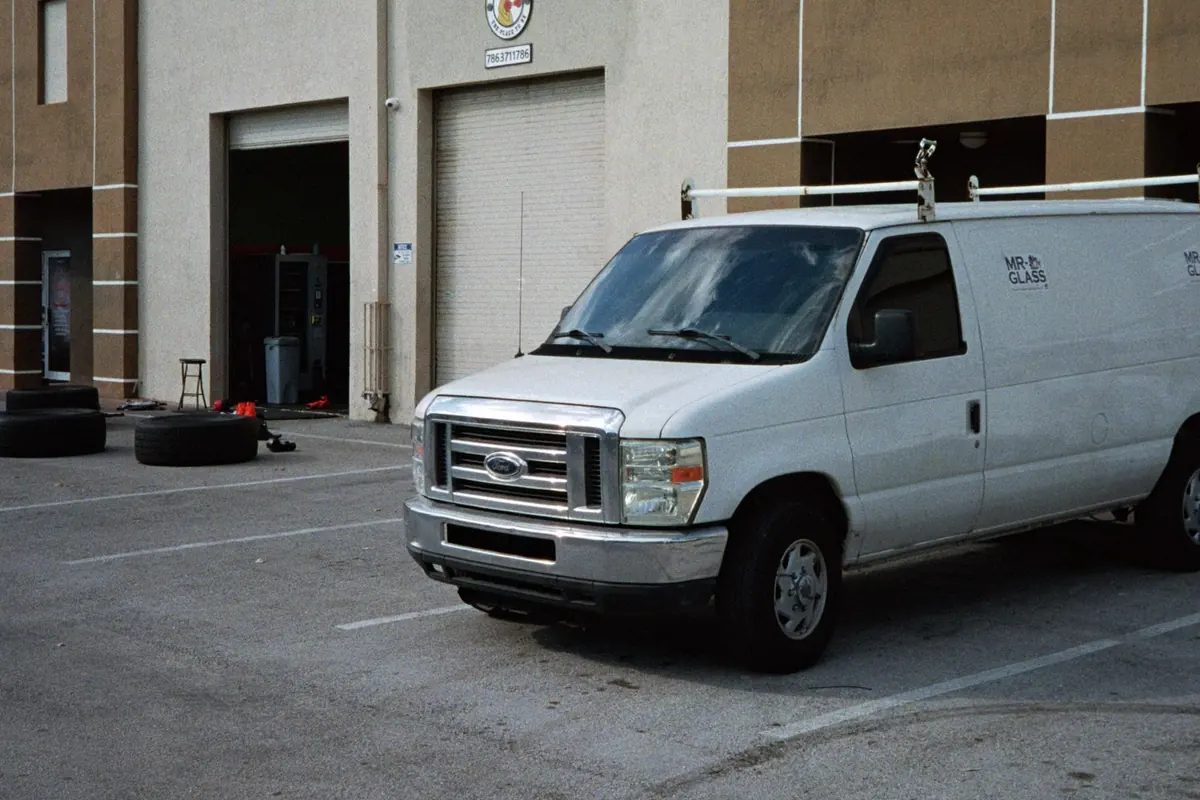
The workaround that is not a workaround. A pickup truck used more than 50% of the time for transporting goods or equipment in the course of earning income, or an extended cab van with seating for no more than three used more than 90% for business transport, is not a “passenger vehicle” and escapes the ceiling entirely. This is a real distinction with real rules, not a label you can choose. Keep the logbook that supports the percentage.

Rental Property: Class 1 and Why Claiming CCA Can Cost You Later
Rental buildings go in Class 1 at 4%. Land is never depreciable, so the purchase price has to be split between land and building, usually using the property assessment ratio.
Two rules that apply specifically to rental property:
1. CCA cannot create or increase a rental loss. You can use CCA to bring net rental income down to zero, but not below. Claim the amount that takes you to nil and no more.
2. Claiming CCA can cost you the principal residence exemption. If you rent out part of your home, or convert your home to a rental, claiming CCA on the building is often what tips CRA toward treating the change of use as a genuine disposition, putting the gain on that portion into tax. For a property you might one day want to shelter, this matters more than the 4% deduction is worth.
3. Recapture on sale is the common sting. Suppose you claim $60,000 of CCA over twelve years on a rental building and then sell at a gain. That $60,000 comes back as fully taxable recapture, not as a capital gain. You deferred tax at 4% a year and then paid it back all at once, at full rates, in a year when you probably also have a capital gain.
The general rule of thumb for residential rentals in BC, where property values have risen: do not claim CCA on the building unless you have a specific reason. Do claim it on appliances and furnishings in Class 8, which genuinely do decline in value.
The Half Year Rule and the Accelerated Investment Incentive
The half year rule. In the year you acquire an asset, you can normally only claim CCA on half the net additions. A $10,000 Class 8 purchase would give you $10,000 × 20% × 50% = $1,000 in year one.
The accelerated investment incentive (AII) changed that. It does two things: it suspends the half year rule, and it adds an enhanced first year allowance on top.
The enhancement is phasing out based on when the property becomes available for use:
| Available for use | First year treatment |
| 2018 to 2023 | Half year rule suspended plus 50% enhancement (1.5× the normal full rate) |
| 2024 to 2025 | Half year rule suspended plus 25% enhancement (1.25× the normal full rate) |
| 2026 to 2027 | Half year rule suspended, no enhancement (the normal full rate) |
| 2028 onward | Half year rule returns |
Immediate expensing for specific classes follows the same phase down. Manufacturing and processing machinery (Class 53) and clean energy equipment (Classes 43.1 and 43.2) had a 100% first year write off for 2018 to 2023, 75% for 2024 to 2025, and 55% for 2026 to 2027.
The practical takeaway for 2026: you still get the full year’s rate in the year of purchase rather than half, which is worth having. The bonus on top is gone, and the half year rule comes back in 2028.
Worked Example: Three Years of CCA on a $60,000 Purchase
A BC corporation buys $60,000 of Class 8 equipment, available for use in 2026.
| Year | Opening UCC | CCA at 20% | Closing UCC |
| 2026 | $60,000 | $12,000 (full rate, half year rule suspended under AII) | $48,000 |
| 2027 | $48,000 | $9,600 | $38,400 |
| 2028 | $38,400 | $7,680 | $30,720 |
Three years in, you have deducted $29,280 of a $60,000 asset and $30,720 is still sitting in the pool.
Without the AII, year one would have been $60,000 × 20% × 50% = $6,000. So the suspension of the half year rule is worth $6,000 of deduction, or about $660 of tax at the BC small business rate, pulled forward.
Under the old full AII (before 2024), year one would have been $60,000 × 20% × 1.5 = $18,000. That is what has been lost.
Undepreciated Capital Cost, Recapture and Terminal Loss
When you dispose of an asset, you subtract the lesser of the proceeds and the original capital cost from the pool. Three things can happen.
| Outcome | When | Tax treatment |
| Pool continues | Assets remain in the class and UCC is positive | Keep claiming CCA as usual |
| Recapture | The pool goes negative | The negative amount is included in income in full. Not a capital gain, fully taxable |
| Terminal loss | The pool is positive but no assets remain in the class | The remaining UCC is deducted in full |
Recapture example. You bought equipment for $50,000, claimed $30,000 of CCA so UCC is $20,000, then sold it for $35,000. The pool goes to negative $15,000. That $15,000 is income. It means you claimed more depreciation than the asset actually lost in value, and the tax system is taking it back.
If you sell for more than original cost, the excess above cost is a capital gain and the portion up to cost creates recapture. Two different treatments on one sale.
Terminal loss example. Same equipment, sold for $12,000, and it was the only asset in the class. The pool holds $8,000 with no assets left, so you deduct $8,000 in full.
Class 10.1 has neither. No recapture, no terminal loss. That is the trade off for the capped capital cost.
Maxpro Financials sets up and maintains CCA schedules for corporations and self employed clients across BC and Alberta, including the recapture and terminal loss tracking that only matters years later, when an asset is finally sold.
Should You Claim the Maximum CCA This Year? When Not To
CCA is discretionary. You may claim any amount between zero and the maximum, by class. Reasons to claim less than the maximum:
- You already have a loss. CCA would create or increase a non capital loss, which expires in 20 years. Preserve the UCC instead, where it never expires.
- You want to use expiring credits or losses. Claiming zero CCA raises taxable income so you can absorb an investment tax credit or a loss carryforward about to lapse.
- Rental property. CCA cannot create a rental loss, so it is capped at bringing net rental income to nil.
- You expect higher rates later. A deduction is worth more against income taxed at 27% than at 11%. A growing corporation approaching the small business limit may prefer to defer.
- You plan to sell soon. Aggressive CCA now means larger recapture on sale, at full rates.
- You may want the principal residence exemption. Discussed above.
Reasons to claim the maximum:
- You are profitable, and a deduction now is worth more than a deduction later
- The asset genuinely is declining in value
- Cash flow matters and you want the tax reduced this year
The one non negotiable: claim or do not claim, but track the UCC correctly. A CCA schedule that was never carried forward properly is one of the more common reasons a business overpays tax for years without anyone noticing.
Where CCA Goes on Your Return: T2125, T776 and Schedule 8
| Situation | Form | Where CCA is calculated |
| Self employed business or profession | T2125, Statement of Business or Professional Activities | Area A, with Areas B through D for additions |
| Rental property, individual | T776, Statement of Real Estate Rentals | Area A, with the land and building split in Area F |
| Corporation | Schedule 8, Capital Cost Allowance | Feeds the Schedule 1 reconciliation |
| Employee claiming vehicle CCA | T777, with a signed T2200 | Part of the motor vehicle expenses section |
| Partnership | T5013, Schedule 8 | Calculated at the partnership level |
One note for corporations: CCA is claimed at the corporate level, and the difference between book depreciation and CCA is one of the standard Schedule 1 add backs. If your financial statements and your tax return show the same depreciation figure, something has gone wrong.
FAQ: Capital Cost Allowance in Canada
Do I have to claim CCA every year? No. It is optional, and you can claim any amount up to the maximum, by class.
What class is a laptop? Class 50 at 55%, along with systems software. Application software goes in Class 12 at 100%.
What class is a work truck? Usually Class 10 at 30%. If it is a passenger vehicle costing over $39,000 in 2026, it is Class 10.1 with the capital cost capped.
Can I deduct the full cost of a $400 tool? Yes. Tools under $500 go in Class 12 at 100% and most are not subject to the half year rule.
Is the half year rule still in effect? For property available for use in 2026 and 2027, the accelerated investment incentive suspends it, so you get the full rate in year one. The rule returns in 2028.
Should I claim CCA on my rental property? Usually not on the building, in a rising market. It cannot create a rental loss, it produces recapture on sale, and it can complicate the principal residence exemption. Do claim it on appliances and furnishings.
What is recapture? Income you report when you sell an asset for more than its remaining UCC. It means you over claimed depreciation and the tax system takes it back, taxed in full.
What is a terminal loss? A deduction for the remaining UCC when the last asset leaves a class and the pool is still positive.
Does CCA reduce my capital gain when I sell? No, they are separate. CCA claimed comes back as recapture. The gain above original cost is a capital gain on top of that.
My accountant has never given me a CCA schedule. Is that a problem? Yes. Without a maintained UCC by class, your future deductions and your eventual recapture calculation are both guesswork.
Have Us Set Up Your CCA Schedule Correctly From Year One
CCA is one of the few areas where a decision made in year one still costs or saves money fifteen years later. The asset classified into the wrong class, the leasehold improvement amortised over the wrong period, the rental building depreciated when it should not have been, the UCC pool that nobody carried forward when the bookkeeper changed.
Maxpro Financials sets up CCA schedules properly from the first year, maintains them across accountant and software changes, and advises on the claim or do not claim decision each year rather than defaulting to the maximum. If you are about to buy a vehicle or a significant piece of equipment, the conversation is more valuable before the purchase than after it.
Book a consultation or call BC +1 (778) 951 1269 / Alberta +1 (403) 437 6016.